 By Liza Citron
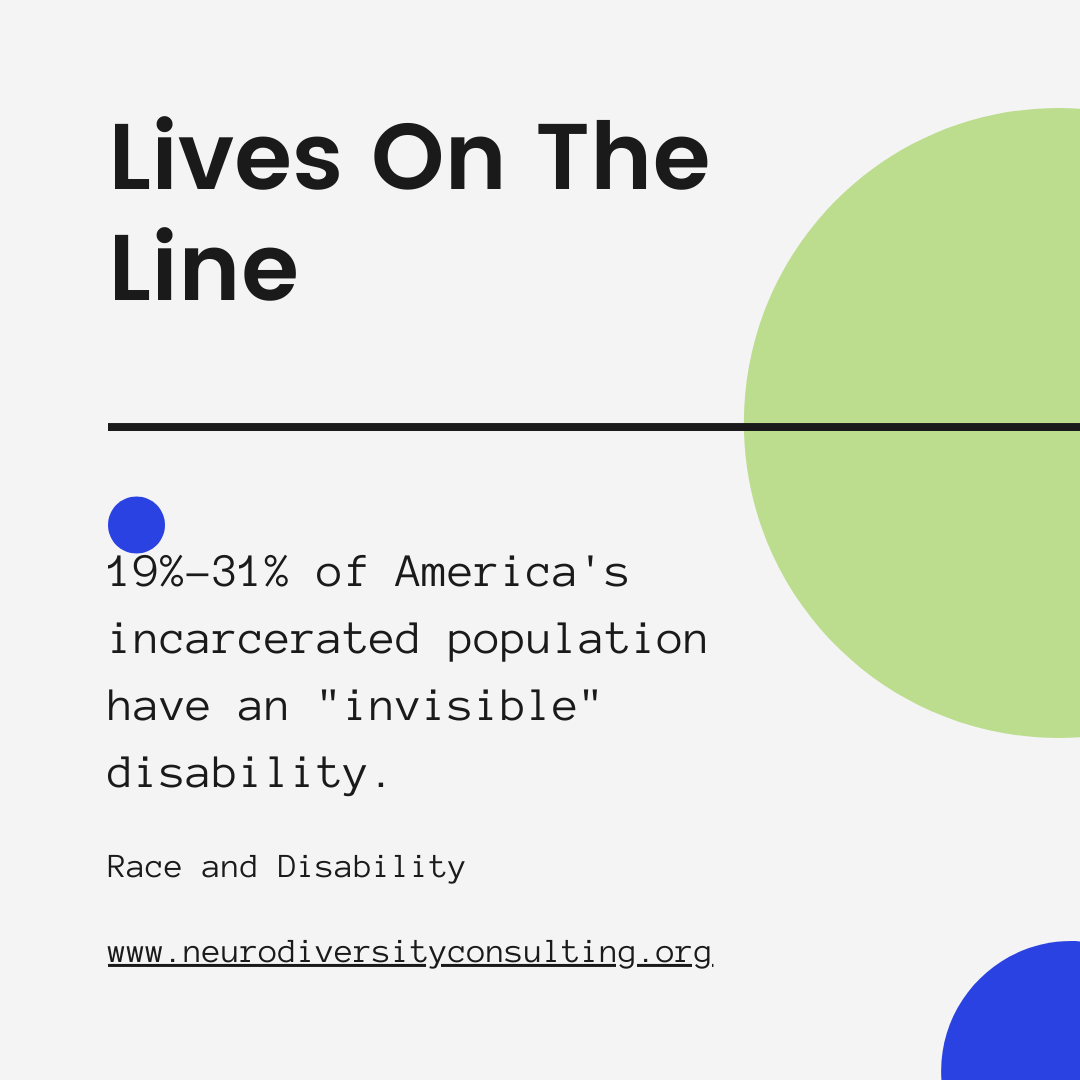
Approximately 26 percent (61 million people) of adults living in the United States are disabled (Centers for Disease Control, 2020). If this is the case, many may wonder why we don’t see more disabled people in our communities. The answer? We see disabled people, likely every day, for something as mundane as a walk down the street. We just don’t see as much evidence as we might expect. Why? Without accounting for social and economic factors, the most straightforward answer is that many of these disabled individuals are living with an invisible disability. Invisible disability is defined as “a … condition that is not visible from the outside, yet can limit or challenge a person’s movements, senses, or activities.” (Invisible Disabilities Association, 2021) For example, I (Liza Citron, author) have a changeable, day-to-day mobility level. I am also autistic. I can be seen with anything from a wheelchair to no mobility aid at all. However, no matter what I am (or am not) using, I am still mobility disabled. Suppose I park in an accessible parking spot because I have a need to, but I am not using a wheelchair. In that case, I still have that need, perhaps because my walking ability is limited. Autism is often an invisible disability for me as well. You can’t necessarily see the overstimulation or the lengths I must go to in order to understand neurotypical behavior. Deafness, blindness, developmental disability, and neurological disabilities can be invisible or visible, depending on the accommodations needed, the person, or the environment and day. So can ADHD, dyslexia, dyscalculia, many other learning disabilities or even mental illness such as depression and anxiety. None of them necessarily have signs that are explicitly externally visible. Some forms of disability, especially environmentally induced rather than hereditary, can disproportionately affect those of particular ethnicities or social groups. For myriad social, economic, and structural reasons, these groups are also often more likely to be of lower socioeconomic standing than their non-minority (and/or abled) counterparts. According to the CDC, in 2020, 1 in 4 Black adults and 3 in 10 Native American/Alaskan adults in the US are disabled, compared to 1 in 5 white adults. These groups also tend to be disadvantaged compared to their white counterparts, with 18.8% and 34.0% living in poverty, respectively. In comparison, only 7.3% of white US citizens fell below the poverty line in 2019. (Census.gov, 2021) (Northwestern University, 2021) In addition, 25.9% of disabled people in the US lived in poverty in 2019, compared to 11.4% of their abled counterparts. (Elflein, 2021) Adults who live in poverty are also three times more likely to be arrested than those who do not. Those earning 150% of the federal poverty level or less are fifteen times more likely to be charged with a felony. (American Action Foundation, 2020) These problems and the intersectionality of invisible disability with race and socioeconomic class are multifactorial. They are not able to be solved easily or overnight. However, with greater awareness and understanding of the complex nature of these situations and groups, the remedy can perhaps begin.
0 Comments
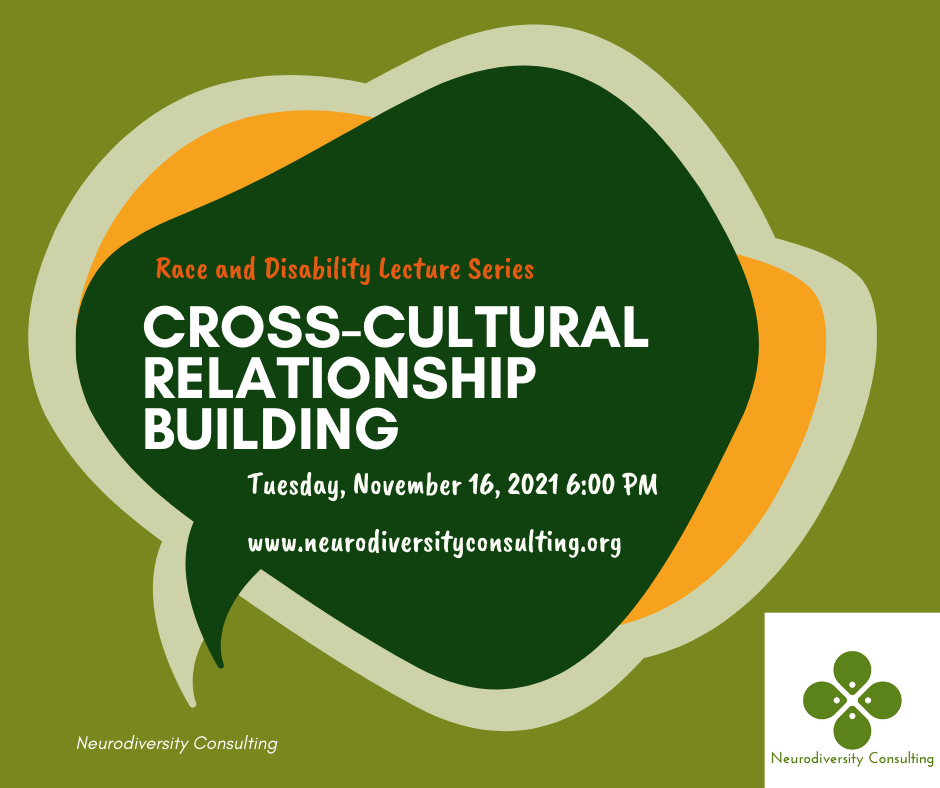
The next lecture in the Race and Disability series produced with our partner, Sanchia A. Callender, Inc, takes place on Tuesday, November 16, 2021 at 6:00 PM. Each of us carries a set of assumptions and beliefs that arise from our experiences with the people we most commonly interact with. This lecture will explore how to manage those assumptions and ideas to open doors for mutual understanding.
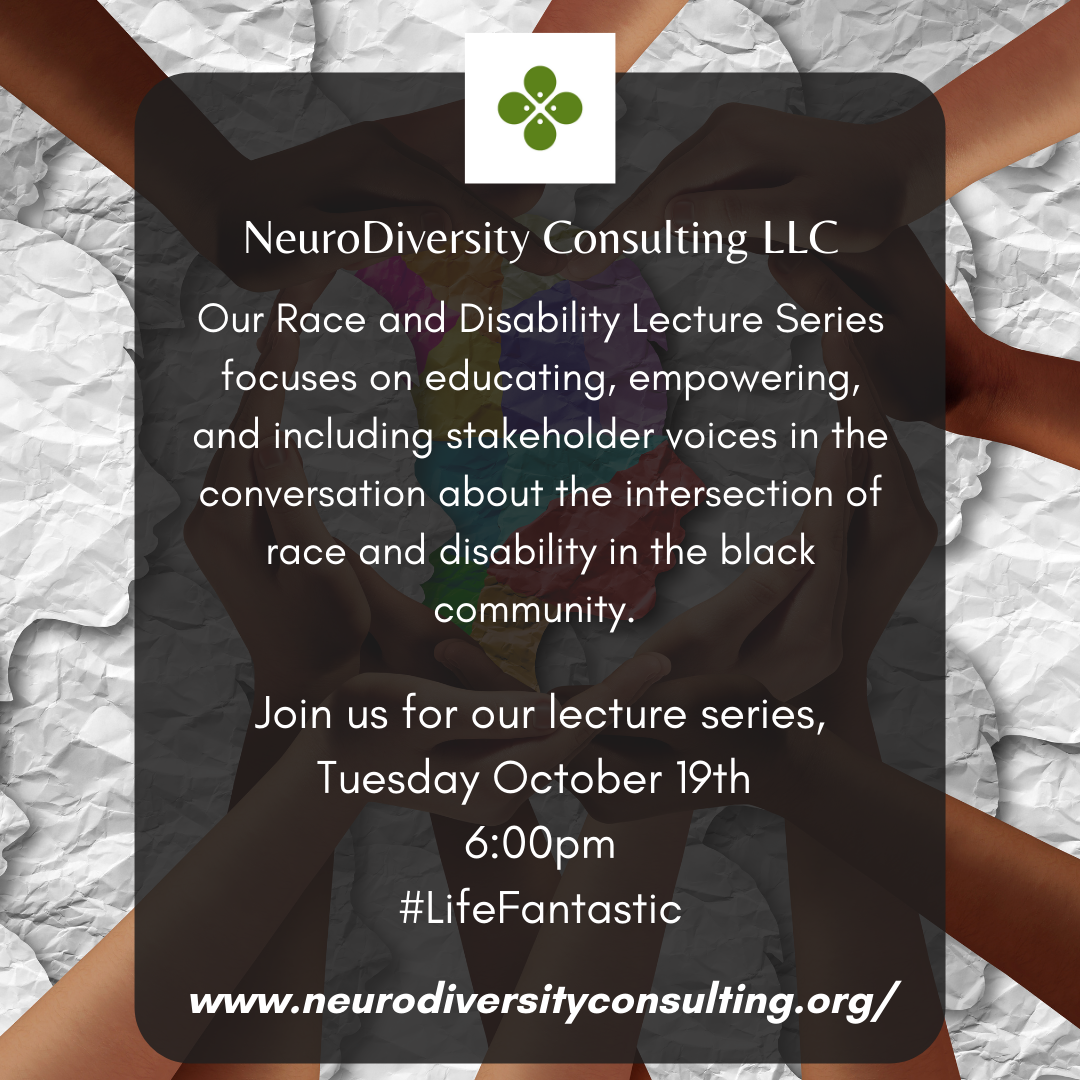
Our Race and Disability Lecture Series focuses on educating, empowering, and including stakeholder voices in the conversation about the black community's intersection of race and disability. Our goal is to engage in meaningful discussions addressing the problems that the black disabled community face.
Black equity and excellence is the rigorous pursuit of knowledge, critical thinking about issues, and inclusion of all components of black society in conversations about the black community. It is the commitment to equipping the community to shape its future through education, empowerment, and inclusion. Finally, it is the freedom to create new experiences and explore new ideas. By creating opportunities to acquire knowledge, engage in critical thinking, and include the voices of disabled people, our race and disability lecture series fosters black equity and excellence. Our partners currently include Sanchia A. Callender, Inc, The Academy of Excellence, Inc, Masking and Kompany, and Straight Independent Radio. The race and disability lecture series is made possible by the Black Equity and Excellence Fund of the Community Foundation of Central New York. By Liza Citron Update 10/4/2021 3:18 PM to include additional information. We may wish to think that the atrocities of institutionalization and the legacy of Willowbrook (Beatings, Burns and Betrayal: The Willowbrook Scandal’s Legacy) are far behind us. There are currently institutions in existence that disturbingly mirror those of the past. The Judge Rotenberg Educational Center (JRC) in Canton, MA, is one such institution. Opened in 1971 as the Behavior Research Institute, the JRC has come under fire for the use of electroshock devices to control residents. Residents at the school are developmentally or emotionally disabled or fall under the vague heading of displaying “autistic-like behaviors.” They are also approximately 90% from the greater New York City metropolitan area and 90% of minority ethnicity. The high proportion of residents from minority ethnic groups suggests a compounding stigma of race and disability. While taxpayer-funded through the public school system, the JRC curriculum is reportedly nonexistent. Students are often placed in front of a computer with little active teaching. In addition, the center’s distance from where most of its residents usually live leaves individuals, families, and communities out of the accountability process. The JRC uses graduated electronic decelerators (GED), delivering as much as 90 mA per two-second shock. For reference, a cattle prod delivers a shock of up to 10 mA for a fraction of a second. The GED is worn like a backpack by the disabled individual and weighs up to 10 pounds. Teachers or other authority figures use remote controls to administer shocks for unwanted behavior. The practice is governed by controversial applied behavioral analysis (ABA) methods and conditioning methods described by behaviorist B.F. Skinner in the 1930s and 40s. JRC staff administer shocks in response to innocuous behaviors such as brief moments of closed eyes or diverted attention. In addition, actions such as crying out while being shocked result in shocks. Regardless of the effectiveness of Skinnerian or ABA methodologies themselves, such treatment can only be described as horrific and torturous. Residents are in a seemingly endless cycle of shocks, and some residents become nonresponsive. At least six people have died at the JRC since its founding. The Food and Drug Administration (FDA) banned the use of GED devices on humans in March 2020. The GED-4, delivering the highest voltage shock, was never approved for use in the first place. In July of 2021, the D.C. Circuit Court overturned the ban, stating it was out of the scope and jurisdiction of the FDA to do so. The JRC argued, and the appeals court judges agreed, that the FDA did not have the authority to enforce the ban. In essence, use of the GEDs could not be banned specifically for the purpose of behavior modification. The devices either had to be prohibited or approved outright, in all circumstances. The legacy of Willowbrook and institutionalization are not as far away as some might think. Individuals on the internet and in- person continue to speak about the conditions for residents at the JRC. Many of them are disabled themselves. Everyone, abled and disabled alike, needs to understand the implications of allowing the JRC to continue shocking vulnerable youth. Read articles like this one and the ones referenced here—sign petitions. Write to your state and federal elected officials asking why taxpayer dollars fund the torment of young people with disabilities. And ask them why better community supports aren’t funded for this vulnerable population. #StopTheShock #StopShockingAutisticPeople Resources and Information
We are deeply saddened by the death of Judson Albahm amid his mental health crisis. We are proud of Judson for his forethought in seeking help in facing his challenges and disappointed that he could not find the help he needed. Central New York families are sadly familiar with the struggle to access appropriate mental health care. We mourn with Judson’s family and join with them in calling for the marshaling of resources to adequately care for vulnerable members of our community like Judson.
The closures of outpatient mental health facilities in Onondaga County have left families adrift as they seek help for their loved ones and for themselves. The inadequate understanding of the needs of autistic people further leaves people like Judson with limited options for treatment or support during a crisis. We encourage families in crisis to reach out to Upstate University Hospital’s Emergency Psychiatry Service, located at the downtown campus, for care. In service, Sanchia A. Callender, Inc Autism Mental Health Initiative Advisory Council Parents for Public Schools of Syracuse, Inc Neurodiversity Consulting LLC The Academy of Excellence, Inc Joshua Michael King for Students Masking and Kompany  Chief Encouraging Officer of Life (C.E.O.O.L), Writer, Editor & speaker who strengthens teams in diversity & inclusion.
Scott has strong administrative and coordination skills for back office operations within banking and corporate environments. He is recognized as a reliable resource for the needs of constituents within the organizations that he serves. He utilizes an analytical approach to solving business needs and finding effective solutions. Scott is a dynamic individual who continually learns and brings a positive optimism and energy to corporate culture as he provides leadership for the corporate vision. His is deeply committed to the success of local philanthropic organizations through volunteering.  We are partnering with Sanchia A Callender, Inc and The Academy of Excellence, Inc to make a greater impact in our community. #HolidayWishList #HolidayWishWeekPlease fill out the contact form to let us know what you will be able to donate to Sanchia A. Callender, Inc to support our joint program offerings with The Academy of Excellence, Inc. Your Generosity ensures that our Executive Leadership Tribe can utilize our funding to provide direct services and programming as we continue to develop our learning spaces of EXCELLENCE! #HolidayWishWeek will run Saturday 12/19- Wednesday 12/23 and donations can be dropped off at 324 University Ave. at our curbside pick-up. For more information please email: Aoexcellenceinc@gmail.com WISH LIST ITEMS: Refrigerator Microwave Hotplates White Boards and/or chalkboards Filing Cabinets Storage Cabinets Laptops or Desktop Computers Printers Vacuum Cleaner Cleaning Supplies Classroom Air Purifiers Sanitizing Supplies Copy Machine Storage Bins Telephone System (6-12 phones) Fireproof Safe or Lockbox Office Supplies Classroom Supplies Educational Toys Books Sensory Tools Bean Bag Chairs Musical Instruments Art Supplies Prepared Shopping Lists or Gift Cards: Walmart Target Wegman's Price Chopper Price Right I was diagnosed with Asperger’s syndrome in 2002, at the age of 5. You may be thinking to yourself, “That’s not a diagnosis anymore!” “Asperger was a monster!” or “What difference does it make?”. Or you may be someone else with that diagnosis, nodding in understanding for what you think you are about to read.
Changing diagnostic labels matter -- quite a lot, in fact. As a result of changing diagnostic labels, I find myself struggling to fit in not only in the neurotypical world, as one might expect, but the autistic or neurodivergent one as well. The fact that I was diagnosed with Asperger’s meant that my parents kept me isolated, away from other autistic children and adults -- a decision that, in hindsight, I now see was ableist and autism-phobic, if you will. It was literally phobic (fear-based) -- they were afraid that I would pick up the habits of those around me; nature vs. nurture and all that jazz. As has been proven by my life, they believed incorrectly. I picked up those behaviors all the same, and instead learned that masking was a better option than acknowledging what and who you are, and having pride in it. I learned that I had to act and appear neurotypical in order to survive in the neurotypical world, and suppress my autistic symptoms and behaviors. I believed I had to stim in a very discreet way, or possibly not stim at all, even when I desperately needed it. I believed that I couldn’t get overwhelmed or shut down in sensory-rich and overwhelming environments -- that it was wrong -- because none of the neurotypical people around me were. In short, nature won out. As such, I’ve struggled to take pride in my autistic identity for years and years, and am only just beginning to again. And now we’ve come full circle -- is it autism, or is it Asperger’s? Are they one and the same? Are they so far apart they can’t even be under the same umbrella? Asperger’s removal from the DSM-5, published in 2013, and its subsequent replacement with pragmatic communication disorder and/or incorporation with autism spectrum disorder has left many without a sense of identity. In addition, now that the diagnosis is no longer recognized, many (myself included) have to be rediagnosed. Diagnosis as an adult is already fraught, and difficult in a busy and hectic adult life. In addition, with diagnostic labels changing, diagnostic criteria are as well, and this only adds to the difficulty of a rediagnosis. There are also many (like myself) who have struggled with acceptance of their identity and Asperger’s, especially in a neurotypical world. These people, some of whom may very well finally be taking pride in their identity, have had that identity stripped away from them and have to get used to new words, new criteria, and even new ways of referring to themselves. While I'm a little late to the party, Greta Thunberg is a good example of this concern. Greta Thunberg, who has been in the news lately, and was named TIME’s 2019 “Person of the Year”, is a good example of this. She’s a Swedish seventeen-year-old girl who has been working hard advocating to help combat climate change. She’s also been diagnosed with Asperger’s Syndrome. When she said just that in one of her speeches, in a language that is not her native one, no less, she was harshly judged, criticized, and discussed online. She was in a situation that was no doubt incredibly stressful -- speaking in front of a large crowd is hard enough for neurotypicals, much less those of us on the spectrum -- and used a term many thought was wrong. But does it matter if Asperger’s is on the DSM, or matter if people still want to use that terminology in referring to themselves? Some say the usage of “Asperger’s” creates a false binary around functionality and social acceptability -- people diagnosed with Asperger’s are the “higher-functioning” and more “socially acceptable” of people on the autism spectrum. Regardless of the fact that functionality labels are entirely mythical and don’t tell us anything about an individual’s needs, this binary is imposed by the neurotypical world, not us, the individuals diagnosed with Asperger’s ourselves. We are not the ones perpetuating it, and as such, should we really be required to give up terminology with which we’ve grown to identify and in which we've finally grown to take pride? Does this terminology really matter, when we can all speak about experiences we’ve shared, struggles we all go through, and societal expectations placed on us all? In a world in which you can be villified and judged for using the wrong terminology, it’s unsurprising that many people with Asperger’s and who are otherwise on the spectrum are afraid to speak up. But if we don’t speak up and share our experiences, not only will this false binary remain in place, it will prevent us, as a unified autistic community made up of incredible, unique individuals, from coming together in solidarity to thrive in a neurotypical world. See the latest article from CEO Samantha Pierce about building resilient students and educators published in the September issue of Family Times magazine. Transforming Tragedies: An effort to build resilience to trauma in school "Everyone experiences distressing events in their lives. You’ve probably heard about trauma, the emotional response to these events. Our emotional reactions to these events can have long term effects on the way we think, make decisions and relate to others. Developing resilience—our ability to cope with stress—makes responding to adversity easier." 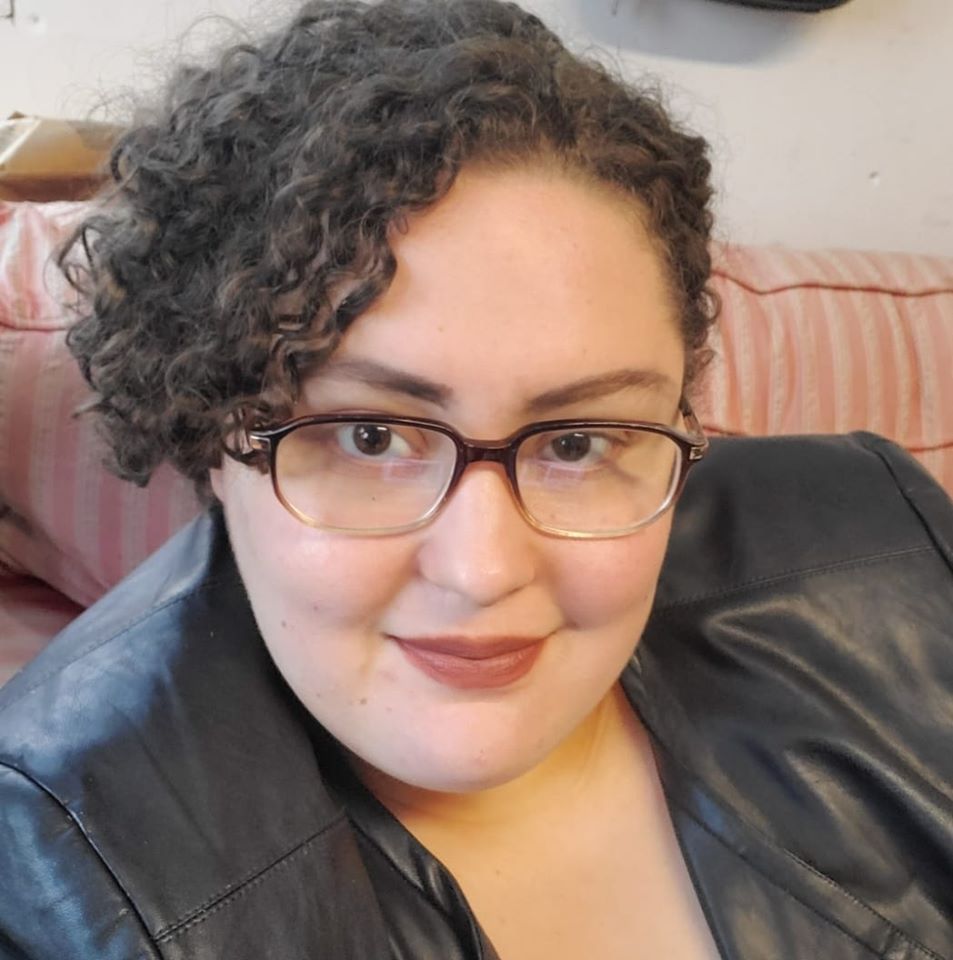 I'm a college student going for a degree in social work, and work with NeuroDiversity Consulting to shed light on issues through that lens.
I am also neurodivergent, having been diagnosed with Asperger's Syndrome (and working on a re-diagnosis) in my very early childhood. Most of my life has been spent seeing things through that different -- not wrong or broken, but different -- lens and filter. I was that girl who would go on and on about particular interests -- some of which changed from year to year -- and devoured books in my spare time. I was the one trying to wrestle in this neurotypical-ruled world with my differences, and with how they changed my outlook on life. That dilemma evolved into my interest in special education and advocacy. Children receiving special education services can benefit from having a staff member in their corner who went through similar struggles. My experiences help me understand, and I care enough to help tailor curriculum and learning methods to meet student needs. I struggled with many elements in my elementary school life. I want to help in any way I can so students don't have to go through that themselves. If I can help even one student, that's worth it for me. What/who (else) am I? In short, I'm not only a neurodivergent social work student, but a musician, writer, artist, disability advocate, and much more. I'm autistic, but that's not all I am -- it's just the way I see the world. |
Categories
All
Archives
December 2021
|
 RSS Feed
|
|