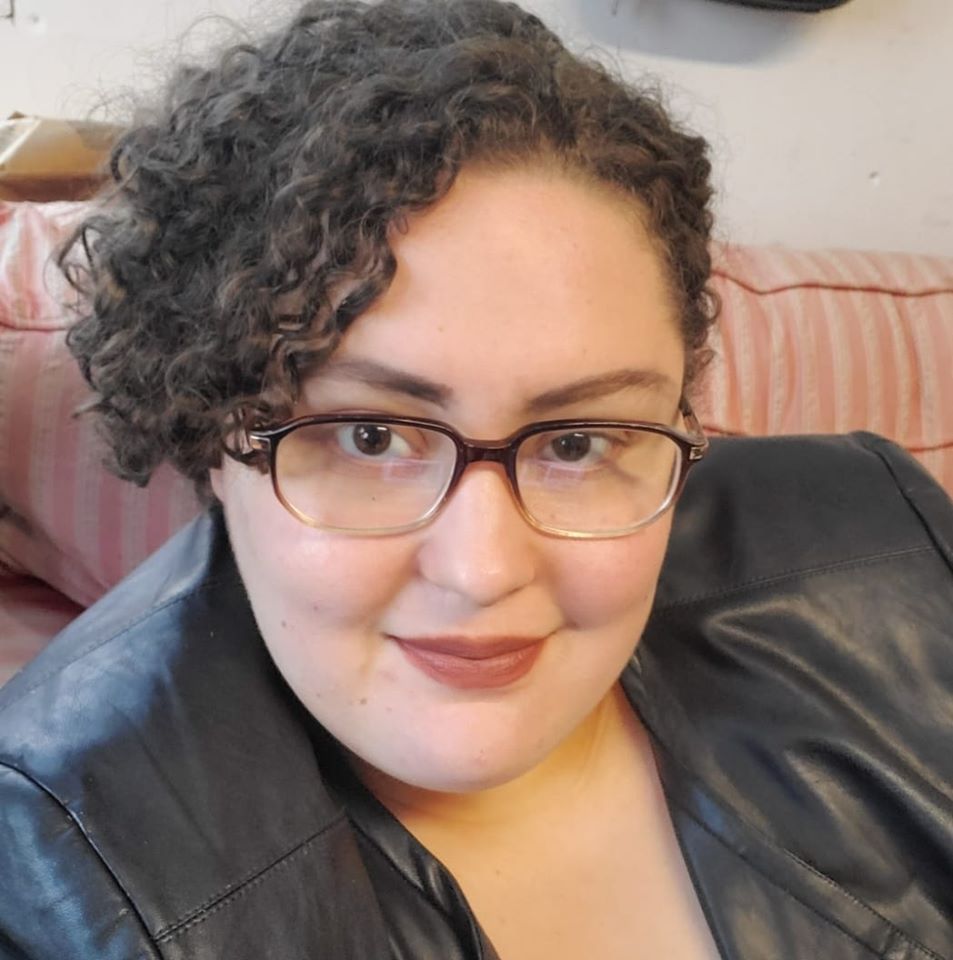
 I'm a college student going for a degree in social work, and work with NeuroDiversity Consulting to shed light on issues through that lens.
I am also neurodivergent, having been diagnosed with Asperger's Syndrome (and working on a re-diagnosis) in my very early childhood. Most of my life has been spent seeing things through that different -- not wrong or broken, but different -- lens and filter. I was that girl who would go on and on about particular interests -- some of which changed from year to year -- and devoured books in my spare time. I was the one trying to wrestle in this neurotypical-ruled world with my differences, and with how they changed my outlook on life. That dilemma evolved into my interest in special education and advocacy. Children receiving special education services can benefit from having a staff member in their corner who went through similar struggles. My experiences help me understand, and I care enough to help tailor curriculum and learning methods to meet student needs. I struggled with many elements in my elementary school life. I want to help in any way I can so students don't have to go through that themselves. If I can help even one student, that's worth it for me. What/who (else) am I? In short, I'm not only a neurodivergent social work student, but a musician, writer, artist, disability advocate, and much more. I'm autistic, but that's not all I am -- it's just the way I see the world.
0 Comments
by Liza Citron  Educators can make the best experiences for students in the classroom. Educators can make the best experiences for students in the classroom. As teachers are going back to school, many might have an autistic or otherwise neurodivergent child in their class -- perhaps for the first time. Educators might reasonably wonder where to begin in tailoring the classroom experience to that child -- connecting to the child as an entirely new experience for the teacher. How different is the autistic experience to the neurotypical one? How does autism affect a child in their formative years? What changes should be made for the child to help them connect to the curriculum and the teacher, and to help them succeed? These are all questions teachers might be asking themselves as the “mad rush” to prepare for the school year comes into full swing.
All these questions may seem daunting to the teacher, especially ones new to their classroom. Everything comes down to paying attention to and carefully observing the child -- and, of course, listening to what they may tell you. Careful observation can tell you what the child’s most significant struggles are, and conversely, what their greatest successes or strengths are or maybe in the future. As an autistic adult, I don’t personally know the neurotypical experience. I can, however, compare my autistic experience with descriptions from neurotypical friends and family members. My perspective helps provide insight into neurotypical and neurodivergent experiences that impact the classroom. One of the main differences I have noted is the capacity for sensory input and susceptibility towards over-stimulation. Things neurotypicals might not even notice can be “deafening,” if you will, to an autistic individual -- and can cause either shutdown or meltdown, depending on the situation. As such, the best learning/work environment for many autistic people, and neurotypical people is one with the least sensory stimuli possible. In such a situation, it is easier to maintain concentration, and much easier to lower anxiety levels, both of which provide a more productive mental state. Another difference to consider, especially with young children, is the theory of mind -- seeing situations from another’s perspective. Theory of mind is an aspect of human behavior and neurology that is important in relationship building and learning. Contrary to what some may think autistic people are not insensitive to what others need or want. However, it can often be difficult for us to see those needs and wants in the context of a situation. Providing an environment for role-play, or anything that requires “characters” can often help develop a person’s understanding of the theory of mind. Every individual, autistic or not, will have their levels and specifics of needs, struggles, and strengths. The above are just two of the multitude of ways in which the autistic experience can differ from the neurotypical one. Taking the time to learn, understand, and account for these individual aspects allows educators to set themselves and their students up for success in the new school year. Read more Neurodiversity Rewires Conventional Thinking About Brains *From December 2007. This brilliant advertising campaign was supposed to raise the profile of autism or something. Still not sure why so many learned people thought this was an okay way to present autism and the people who live with autism to the world. This is quite repulsive. In a society that seems to put self esteem above all else for children it seems that it is quite alright to degrade individuals with developmental delays and psychiatric disorders and perpetuate stereotypes about them under the guise of raising awareness. The kids really did spend Christmas playing with the boxes the toys came in. *Originally posted on my personal blog.
April rolls around every year and every year for autistic folks, their families, and friends we become the center of a media frenzy. Some welcome this some not so much. Lost in the hubbub though is the fact that life is precious and beautiful especially when me make conscious decisions to make it so for our autistic selves, family, and friends.
I've been busy researching and writing my first book about autism, Parenting Autism. Please considering supporting my book by donating and/or spreading the word. Thanks! "The Nurtured Heart Approach® is an individualized person centered relational approach to fostering healthy interactions with others. Anyone can use NHA® in professional and personal settings. NHA® digs down to the intrinsic value of the individual to build on a positive foundation to create success." Samantha Pierce Certified NHA® Trainer I got my first taste of NHA® one wintery Thursday afternoon when the program director of a local agency visited my honors abnormal psychology classroom. I asked the question above and she proceeded to provide a very effective demonstration of how NHA® can have a powerful impact on a person’s life. Her answer grabbed and held my attention. I was hooked in less than five minutes. She mentioned that there would be a workshop on NHA® that very weekend. I wanted to know more.
I wasted no time signing myself and my husband up for that workshop. They were providing childcare so I didn’t have to worry about what we would do with the kids. Sitting on the edge of my seat more often than not I listened as NHA® was explained. Designed to bring out the greatness of the individual it was what I had been struggling to teach my children about themselves for years. I discovered I was already on the NHA® path. It was a gratifying experience as a parent to find such like minded people in the world. I went home and tried out NHA® on my children. They were as stunned by it as I was. One child declared to himself, in that child’s whisper that has the ability to reach every corner of a room, “Something is wrong with mommy. She’s excited that I’m doing something right!” He was as stunned by the application of NHA® as I was. It makes sad sense if you think about it. How often do we pull out all the stops to celebrate people when they are doing what is right? Unless you are steeped in NHA® you have to admit that that hardly ever happens. NHA® brings to light the power of doing just that. It can transform lives. In the months following that first workshop I purchased some of the NHA® books and set about dazzling my family with their own greatness. I watched as my children bloomed under the realization that they were indeed formidable human beings. As for myself I was more and more drawn to NHA®. Just to be sure that it was something I really wanted to commit to, I confess to having a reputation for impulsiveness in some quarters, I took another full day workshop. By the end of that workshop NHA® was looking more and more like the way I should go for myself and my family. They were so many tantalizingly wonderful possibilities with NHA®. To that end I completed the one week NHA® Certified Trainer Intensive in Syracuse, NY. It would have been a grueling week had it not been for the nature of the subject matter presented. Instead it was an intense week spent delving into the foundations and application of NHA®. I came away from the week ready to guide others along in the path to discovering NHA®. Now I look forward to the daily challenge of helping others discover and nurture what is good within them. Life is a completely different experience when you realize the greatness that you are capable of.  by Jeremy Pierce, Ph.D.
There's a relatively new movement in the communities of people who deal regularly with autism and related conditions that's assigned themselves the term "neurodiversity" as a shorthand reference to their commitment to affirming atypical neurological conditions as equally legitimate. This movement shuns the terms 'normal' and 'abnormal' and instead prefers to speak of those who are neurotypical and those who are not. The neurodiversity movement seeks to identify various traits common with autism as neither better nor worse but simply different. This movement should be praised for its recognition that respecting people with autism requires taking into account how differently they take in information, process it, use it, and produce various responses. They rightly emphasize that an atypical neurological state need not be thought of as a disease that needs a medical cure or treatment or a disability that requires taking the person to be deficient. They recommend supporting a person for who they are rather than trying to "fix" them to conform to the standards everyone else has. Some autism advocates on the autistic spectrum insist that they wouldn't want to be made "normal" if a "cure" were ever found. They like being the way they are. There's something obviously right about most of that. The more I read stuff from this movement, however, the more disturbed I get that there's something they're just not seeing, and the good in what I just wrote is blinding a lot of well-meaning people to a serious philosophical error lying behind much of what the neurodiversity movement produces. Consider this story by Karen Kaplan of the Los Angeles Times. She is right to point out that, just because autistic people do badly on certain standardized tests, it doesn't mean they're cognitively deficient. It may well be that the reason a certain person scores low on a certain test is because the test is relying on typical patterns of language use, and someone with autism may be using a different pattern of language use. The underlying cognitive ability being tested for may be stronger than the test shows. That's all correct. But in her rush to make this point, Kaplan completely ignores the fact that the reason someone is scoring low on the test is because of a genuine deficiency in the kind of language use that most people are much better able to engage in. That means there is a lack of ability that comes with autism, even if its manifestation will be different from person to person.  Another article in our series of things NTs say about Autistics. Tikatia Morris is the marketing director at NeuroDiversity Consulting LLC. Learn more here and check out the intro to the series as well as our article on discipline.
"But he's so smart!" "Are you sure she isn't just faking it?" "He doesn't look autistic." "Aspergers...that's just a little socially awkward." By: Tikatia Morris In 2008, radio show host, Michael Savage had this to say about autism: "fraud, a racket. ... I'll tell you what autism is. In 99 percent of the cases, it's a brat who hasn't been told to cut the act out. That's what autism is. What do you mean they scream and they're silent? They don't have a father around to tell them, 'Don't act like a moron. You'll get nowhere in life. Stop acting like a putz. Straighten up. Act like a man. Don't sit there crying and screaming, idiot." Here is how one adult with autism described how it feels when a person doesn't believe in the diagnosis: "As if living your whole life incapable of being normal no matter how much effort you put in isn't bad enough, there are people that try to convince you that the condition you're diagnosed with doesn't exist and that you're just a social failure." Autism is, by definition, a spectrum disorder. Individuals with autism have strengths and weaknesses, just the same as their neurotypical counterparts. Some individuals have excellent verbal skills, are sociable, and enjoy being around other people regularly. This does not invalidate their diagnosis. This simply means that they have those skills as a strength. The DSM-IV lists 5 separate diagnoses under the umbrella of Autism Spectrum Disorders. These are: Autistic Disorder, Asperger's Disorder, Pervasive Developmental Disorder Not Otherwise Specified (including Atypical Autism), Rett's Disorder, and Childhood Disintegrative Disorder. Each includes it's own specific diagnostic criteria and each, while under the umbrella of Autism Spectrum Disorder, is unique unto itself as well. Since there are 5 differing disorders under this one umbrella, it wouldn't be much of a stretch to assume that each disorder differs from the others not only in diagnostic criteria, but also in severity of symptoms; hence the term Autism Spectrum Disorder. As a parent, I've often encountered comments like those quoted above from not only neurotypical strangers, friends, and family, but also from professionals such as my son's teachers. When he "perfoms" well in a school setting (mostly due to his overall anxiety from being around that many people) I find myself having to prove his diagnosis to the professionals within that school. They often end up trying to remove services claiming that he doesn't need them even when he's obviously (to me anyway) performing so well because those services are in place. In our personal world, we've come against opposition from friends, and family members alike. The frustration that ensues as a parent having to prove my son's diagnosis is immeasurable, and I'm sure that my son, were he able to explain it, would say that he is not faking his interpretations of his surroundings, nor is he simply misbehaving for the sake of attention or because he's just being a putz, as Savage claims about those on the spectrum. Even parents of autistics can fall prey to disbelief. As Jim Sinclair point out in his essay, “Don’t Mourn for Us”, parents begin on a path of either love and support or rejection the moment of their child’s diagnosis. Sinclair makes the distinction that the source of parents’ grief at an autism diagnosis has, “NOTHING to do with autism, it regards the inability to have the ‘expected relationship’ with their child." When parents continue to misplace this grief onto their child, avowing to wipe this ‘abomination’ off of the face of the earth, they are also stating that their, “greatest wish is that one day [autistics] will cease to be, and strangers you can love will move in behind our faces." When parents finally come to terms with their child's diagnosis, and accept that child for who he or she is, there is still yet another level in our disbelief pyramid. There are then the parents within each group of diagnosis who may have the tendency to belittle another child's diagnosis simply because that child may present the disorder differently from their own child. For example a parent whose child is nonverbal may scoff at a child who is capable of speech that they don't have "real" autism. Parents of children who have these milder versions of autism may feel that they don't fit in with the parents of neurotypical kids, but that they also don't have the support of other parents within the autism community. A major issue regarding autism is a lack of understanding and education, both on the parent and caregiver parts as well as on that of the neurotypical community at large. The changes proposed in the DSM-V may to help alleviate some of the skepticism and misunderstanding of autism spectrum disorders. The proposal is such that those five separate diagnoses will become one single diagnosis of Autism Spectrum Disorder with three distinct levels of severity. There is still a lot of debate within the autism community as to whether this proposition will end with positive results or negative. In conclusion, educate yourself, your families and your communities; and as the saying goes: "When you meet one autistic person, you've met one autistic person." These are excerpts from an article was developed from a talk introducing the concept of neurodiversity, the secular concept that autism and related conditions are a variation of human neurology rather than a disease, to Christian audiences in the context of Psalm 139: 13-16.
By Samantha Pierce What is Neurodiversity? At its core neurodiversity seeks to recognize the value and dignity of those individuals who have traditionally portrayed as broken, diseased and less than human because disability. The secular neurodviersity movement posits that atypical neurological development is a naturally occurring difference that is to be recognized and respected just as any other biological variation. Autism, ADHA, Tourette Syndrome Cerebral Palsy, and any number of a host of conditions need not be seen as a terrible tragedy. Instead recognize the basic humanity of these individuals and treat them with the respect due any other human being. Respect for the dignity of the individual regardless of their ability is a concept that resonates with Christians who hold strongly to the belief that each of us is a precious creation of God formed in his image and as such deserving of love and respect. Why Neurodiversity? Hope for something better is a strong component of the neurodiversity movement. Thomas Armstrong notes in his essay Neurodiversity: A Concept Whose Time Has Come, “Neurodiversity brings with it a sense of hope, that all individuals, regardless of how they read, think, feel, socialize, or attend, will be recognized for their gifts, and accorded the same rights and privileges as any other human being.” This hope is offered in light of the checkered past, and present, humanity has when it comes to dealing with individuals whose functioning deviates from the norm. The parent driven cure culture that subjects children to unproven and dangerous treatments, the deaths of autistic children and adults at the hands of their caretakers, and a past of forced sterilization and institutionalization of disabled individuals are all issues that neurodiversity pushes back against. Neurodiversity has entered the ideological fray in a world where more than 90 percent of all women who receive a prenatal diagnosis of Down syndrome choose to terminate their pregnancies as noted in the 2008 article Airbrushing Diversity: Parents of Down Syndrome Children Tell of Abortion Pressures. This is the stark reality of how the world views disability and what the world does about it when given the opportunity. The plight of babies with Down syndrome reflects the insidious influence that eugenics still holds in western cultures. What Can Christians Contribute? Within the neurodiversity movement is a strain of respect for the individual that Christians can easily relate to. It is the echo of what the Psalmist writes in Psalm 139 For you formed my inward parts; you knitted me together in my mother’s womb. I praise you, for I am fearfully and wonderfully made. Wonderful are your works; my soul knows it very well. My frame was not hidden from you, when I was being made in secret, intricately woven in the depths of the earth. Your eyes saw my unformed substance; in your book were written, every one of them, the days that were formed for me, when as yet there was none of them. Psalm 139:13-16 ESV Christian thought posits that each individual is a unique and marvelous creation made in the image of God, fearfully and wonderfully made to quote the Psalmist. As such each of us is worthy of love and respect, no child or adult should have to hear how they are poisoned, broken, soulless or somehow undesirable and undeserving because of their disability. The value of a person to God is not tied to what they can do but the fact that they exist. Reaching out to the neurodiversity movement provides the opportunity to build bridges within the disability rights movement lending Christian voices and Christian concepts to the discourse. The greatest impact that Christians can have is to demonstrate the love the God has shown us. Love that like leaves a mark on the lives it touches. Even a self professed cranky old atheist recognizes the power of such love: “Although I am not a fan of religion in general, I love the commitment to family and to love beyond oneself that faith often awakens in others. …Christian values can open up a deeper and more meaningful conversation about people with autism than what we usually see on TV. “This is one example of how Christian people often express an openness to people who are different and an appreciation of love that cranky old atheists like me could learn from.” What better endorsement than that about the capacity for love to change people’s lives? |
Categories
All
Archives
December 2021
|
 RSS Feed
|
|